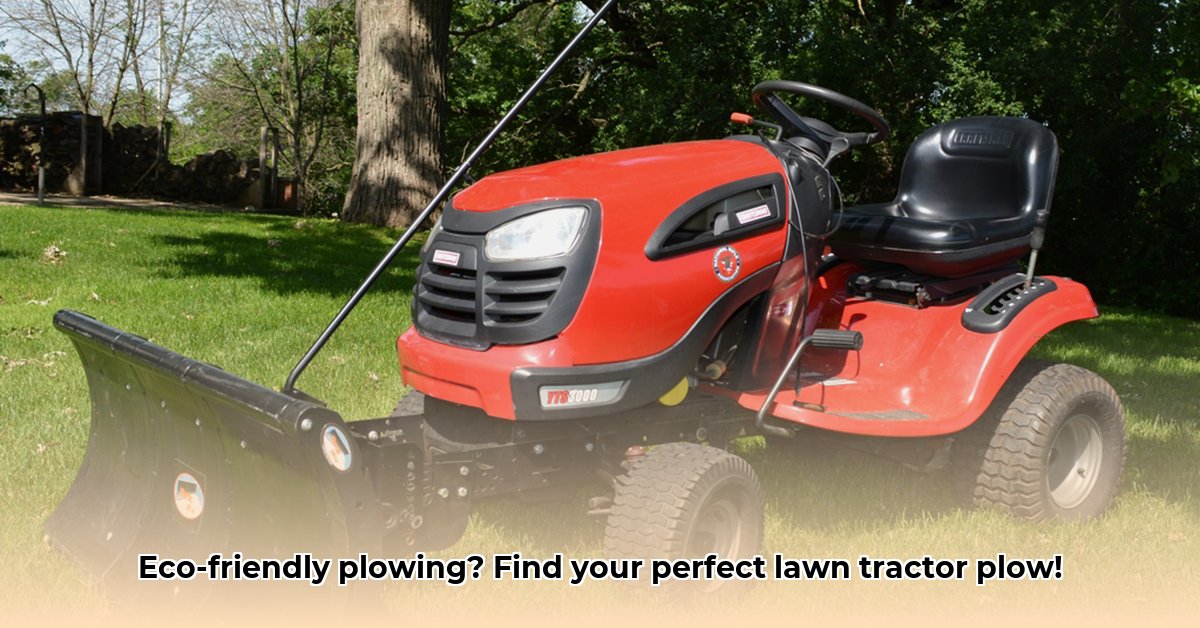
Plow Selection for Sustainable Tillage: A Comparative Analysis of Small-Scale Moldboard Plows
Choosing the right plow for your lawn tractor necessitates a balance between effectiveness and environmental responsibility. This report assesses the sustainability of two popular small-scale moldboard plows—the Brinly-Hardy PP-51BH and a comparable CountyLine model—highlighting existing knowledge and critical knowledge gaps. Both are designed for small-scale farmers and home gardeners seeking affordable, simple tillage solutions. However, a comprehensive sustainability assessment requires more data than is currently available. For more information on lawn tractor maintenance, see this helpful guide.
Product Overview: Brinly-Hardy PP-51BH and CountyLine Plows
Both the Brinly-Hardy PP-51BH and the CountyLine plow are single-bottom moldboard plows suitable for smaller tractors or ATVs. They are marketed as budget-friendly options, appealing to small-scale farmers and home gardeners. However, detailed specifications regarding material composition, manufacturing processes, and energy consumption remain largely unavailable. This lack of transparency hampers a complete assessment of their environmental footprint. A key question to consider is: How can manufacturers improve the transparency of their product information to facilitate better sustainability assessments?
Comparative Analysis: Limitations of Available Data
Direct comparison between the Brinly-Hardy PP-51BH and the CountyLine model proves difficult due to insufficient data. While both offer affordability and ease of use, critical information regarding their long-term impact on soil health is missing. Key parameters such as soil compaction levels, energy consumption per acre, and effects on soil biodiversity are currently unknown for both models. This lack of data highlights the need for more rigorous testing across diverse soil types and conditions. What are the practical implications of this limited data when choosing a sustainable tillage tool?
| Feature | Brinly-Hardy PP-51BH | CountyLine Model | Notes |
|---|---|---|---|
| Price | (Insert Price) | (Insert Price) | Prices may vary depending on the retailer and time of purchase. |
| Recommended HP | (Insert HP Range) | (Insert HP Range) | Ensure compatibility with your tractor's horsepower. |
| Working Width | (Insert Width) | (Insert Width) | Influences the area covered per pass and overall time efficiency. |
| Material Composition | (Insert Material) | (Insert Material) | Impacts plow durability, longevity, and potential environmental impacts. |
| Manufacturer's Claims | (Insert any available claims about sustainability or eco-friendliness) | (Insert any available claims about sustainability or eco-friendliness) | Scrutinize these claims for verifiable evidence and avoid unsubstantiated assertions. |
Sustainability Assessment: Addressing Key Knowledge Gaps
Assessing the sustainability of these plows demands a holistic approach, considering several key factors:
Soil Compaction: Moldboard plowing, even on a small scale, can compact soil, reducing water infiltration and root growth. Quantifying the extent of compaction caused by these specific plows is vital for determining their long-term impact on soil health and productivity. How can we quantify the soil compaction caused by each plow model under various soil conditions?
Energy Efficiency: The energy consumption (fuel usage) of each plow directly impacts its carbon footprint. Data on fuel usage per acre, factoring in soil type and plowing depth, is crucial for a comprehensive sustainability evaluation. What are the efficient methods for collecting accurate data on fuel consumption per acre for different soil conditions?
Long-Term Soil Health: Repeated use of any tillage method can alter soil structure and organic matter content. Long-term field studies are necessary to understand the cumulative effects of these plows, especially concerning soil fertility, nutrient cycling, and overall soil health. How can long-term field studies be designed to provide reliable data on the long-term effects of these plows on soil health?
Water Runoff and Erosion: Tillage increases susceptibility to water runoff and soil erosion. Measuring the impact of these plows on water runoff and erosion rates is critical, especially in areas prone to heavy rainfall. How can we measure the rates of water runoff and soil erosion caused by the use of these plows?
Biodiversity: Tillage affects soil biodiversity, which plays a crucial role in nutrient cycling and overall ecosystem health. Investigating the impact of these plows on soil microbial communities and other soil organisms is essential. What are the best practices for measuring the impacts of tillage on soil biodiversity?
Actionable Recommendations: A Collaborative Approach
Addressing the knowledge gaps requires a multifaceted approach involving various stakeholders:
Farmers and Gardeners: Maintain meticulous records of your plowing practices, including soil type, plowing depth, fuel consumption, and observable changes in soil properties over time. Share your data with researchers to contribute to a larger data pool.
Researchers: Conduct comprehensive field trials comparing moldboard plowing with alternative tillage methods (e.g., no-till, reduced tillage) across diverse soil types and climatic conditions. Prioritize measuring soil compaction, energy consumption, long-term soil health indicators (e.g., organic matter content, nutrient levels), and biodiversity.
Manufacturers: Provide complete and transparent product specifications, including materials used, manufacturing processes, and estimates of energy consumption during the manufacturing and use phases. Collaborate with researchers to investigate potential design improvements that minimize soil disturbance and enhance sustainability.
Government Agencies and Funding Bodies: Support and fund research initiatives that address the critical knowledge gaps concerning sustainable tillage practices. Advocate for policies that incentivize the adoption of environmentally friendly agricultural techniques.
Conclusion: The Path Towards Sustainable Tillage
The information gap concerning the long-term sustainability of small-scale moldboard plows highlights the need for collaborative research and data sharing. Addressing these uncertainties requires coordinated efforts from farmers, researchers, manufacturers, and policymakers. Only through rigorous investigation and open communication can we make informed decisions regarding sustainable land management practices and advance the field of sustainable agriculture.